
List of National Symbols of India
(Complete Names, Meaning & Details)
Quick Answer
National symbols of India are official representations of the country’s identity, culture, and heritage. They include the national flag, emblem, animal, bird, flower, and more. These symbols reflect India’s values, history, and unity, and are used in education, governance, and national representation.
Summary
This guide covers the complete list of national symbols of India including their names, meaning, and importance. It includes tables, explanations, and downloadable charts for students and general knowledge learners. 📘
| Category | Symbol |
|---|---|
| National Animal | Tiger 🐅 |
| National Bird | Peacock 🦚 |
| National Flower | Lotus 🌸 |
| National Tree | Banyan 🌳 |
| National Fruit | Mango 🥭 |
What are National Symbols of India?
National symbols of India refer to the official icons, objects, or living organisms that represent the country’s identity, culture, and values. These symbols are selected by the Government of India and are used to promote national pride, unity, and heritage among citizens. 🇮🇳
These symbols are commonly used in schools, government documents, competitive exams, and public awareness programs to represent India at both national and international levels.
Complete List of National Symbols of India
| Symbol Type | Name | Adopted |
|---|---|---|
| National Flag | Tiranga 🇮🇳 | 1947 |
| National Emblem | Ashoka Lion Capital 🦁 | 1950 |
| National Anthem | Jana Gana Mana 🎶 | 1950 |
| National Song | Vande Mataram 🎵 | 1950 |
| National Animal | Bengal Tiger 🐅 | 1973 |
| National Bird | Indian Peacock 🦚 | 1963 |
| National Flower | Lotus 🌸 | — |
| National Tree | Banyan 🌳 | — |
| National Fruit | Mango 🥭 | — |
| National River | Ganga 🌊 | 2008 |
| National Aquatic Animal | Dolphin 🐬 | 2009 |
| National Heritage Animal | Indian Elephant 🐘 | 2010 |
| National Calendar | Saka Calendar 📅 | 1957 |
National Symbols of India with Details
National Flag – Tiranga
The national flag of India, also known as Tiranga, consists of three colors: saffron, white, and green with the Ashoka Chakra in the center. It represents courage, peace, and prosperity. 🇮🇳
National Emblem – Ashoka Lion Capital
The national emblem is adopted from the Ashoka Pillar at Sarnath. It features four lions standing back to back, symbolizing power, courage, pride, and confidence. 🦁
National Animal – Bengal Tiger
The Bengal Tiger symbolizes strength, power, and grace. It was chosen to represent India’s rich wildlife and biodiversity. 🐅
National Bird – Peacock
The Indian Peacock is known for its beauty and grace. It represents elegance and pride in Indian culture. 🦚
National Flower – Lotus
The lotus symbolizes purity and spirituality. It grows in muddy water but remains clean, representing truth and resilience. 🌸
National Tree – Banyan
The banyan tree represents immortality and strength. It is known for its long life and large canopy. 🌳
National Fruit – Mango
Mango is known as the king of fruits and represents abundance and richness. 🥭
National River – Ganga
The Ganga is considered sacred and supports millions of people. It symbolizes purity and life. 🌊
National Aquatic Animal – Dolphin
The Ganges river dolphin represents purity and the health of aquatic ecosystems. 🐬
Importance of National Symbols
National symbols play a vital role in shaping the identity of a nation. They help citizens connect with their culture, traditions, and values. These symbols promote unity and patriotism among people. ❤️
- Promote national unity
- Represent culture and heritage
- Used in education and exams
- Enhance global identity
History of National Symbols of India
Most national symbols were adopted after India gained independence in 1947. They were carefully selected to reflect India’s traditions, diversity, and values. 📜
Over time, additional symbols like the national river and aquatic animal were introduced to highlight environmental importance.
Who Needs to Learn National Symbols?
National symbols are important for students, competitive exam aspirants, and general knowledge learners. They are frequently asked in exams and interviews. 📚
Download National Symbols of India PDF
Get the complete National Symbols of India PDF with names, pictures, meanings and important facts. This printable chart is useful for students, teachers, competitive exams, GK preparation and school projects. 📥
📥 Download National Symbols of India PDF
Download the complete National Symbols of India PDF chart with names, meanings, important facts and pictures. Useful for students, teachers, competitive exams, GK preparation and school projects.
national symbols of india, national symbols of india pdf, national symbols of india list, national symbols of india with names, national symbols of india with pictures, national animal of india, national bird of india, national flower of india, national tree of india, national emblem of india, national flag of india
Download and save this National Symbols of India chart featuring the national emblem, flag, anthem, song, animal, bird, flower, tree, fruit, aquatic animal, calendar and other important national identity elements.
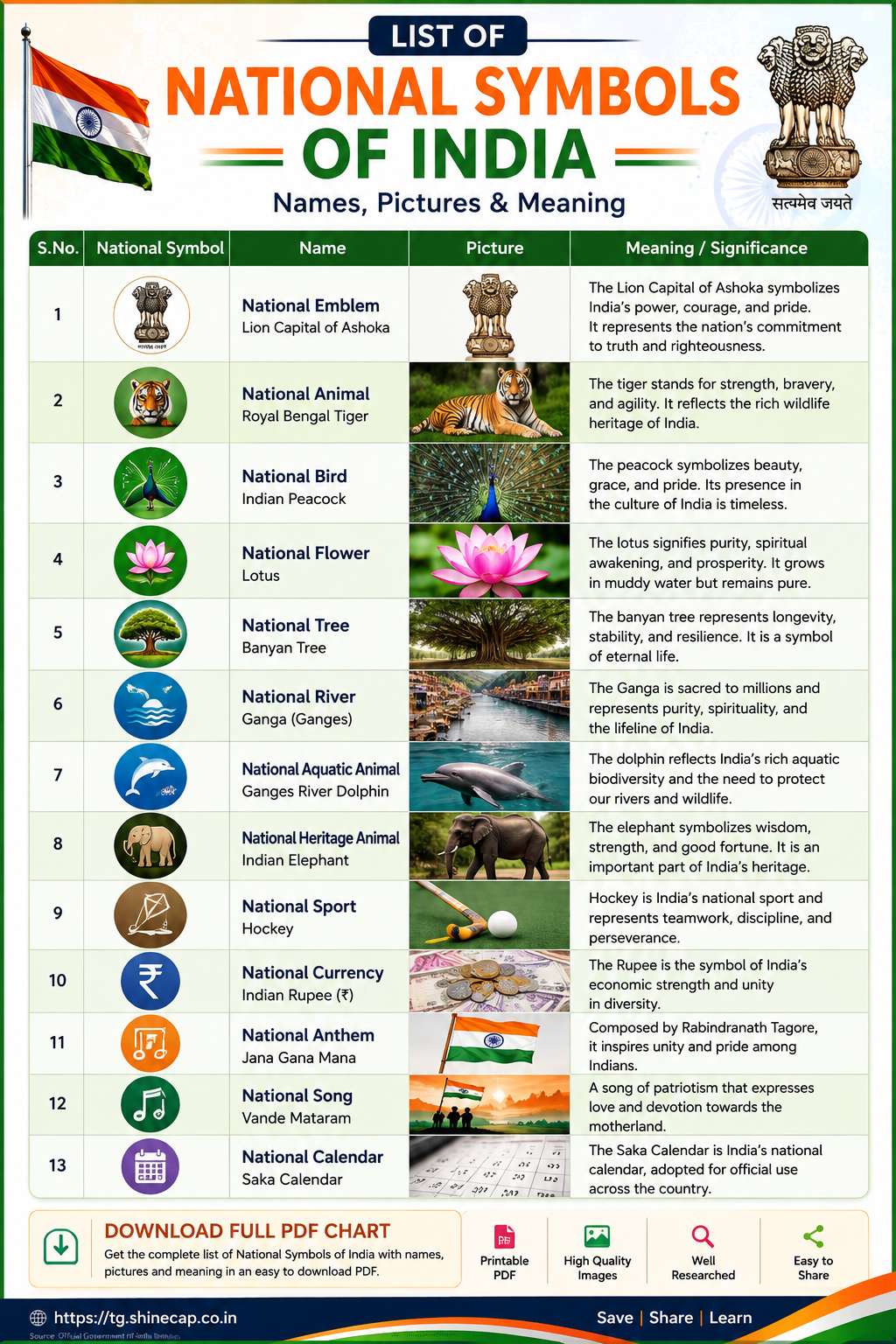
📥 Download the National Symbols of India with names, pictures, scientific names and meanings.
📌 Similar guides: States and Union Territories of India, Public Holidays in India 2026, Important Government Websites in India, Vehicle Registration Codes in India
External References:
Conclusion
National symbols of India represent the country’s rich heritage, culture, and values. Understanding these symbols helps build awareness and respect for the nation. 🇮🇳
From the Tiranga to the Bengal Tiger, each symbol has a unique meaning and plays an important role in representing India globally.
📌 Explore more useful lists and codes in our complete reference hub .
Suggested Post
- States and Union Territories of India and Their Capitals
- Public Holidays in India 2026
- Vehicle Registration Codes in India
- Important Government Websites in India
Frequently Asked Questions (FAQs)
What are national symbols of India?
National symbols of India are official symbols like the flag, emblem, animal, and bird that represent the country’s identity and values.
How many national symbols are there in India?
India has more than 10 officially recognized national symbols including the flag, emblem, animal, bird, flower, and others.
What is the national animal of India?
The national animal of India is the Bengal Tiger, symbolizing strength and power.
What is the national bird of India?
The national bird of India is the Peacock, known for its beauty and grace.
Why are national symbols important?
National symbols are important because they represent a country’s identity, culture, and unity.